The Screen in Your Pocket Just Became Obsolete: Inside the Secret Lab That Killed the Smartphone Forever
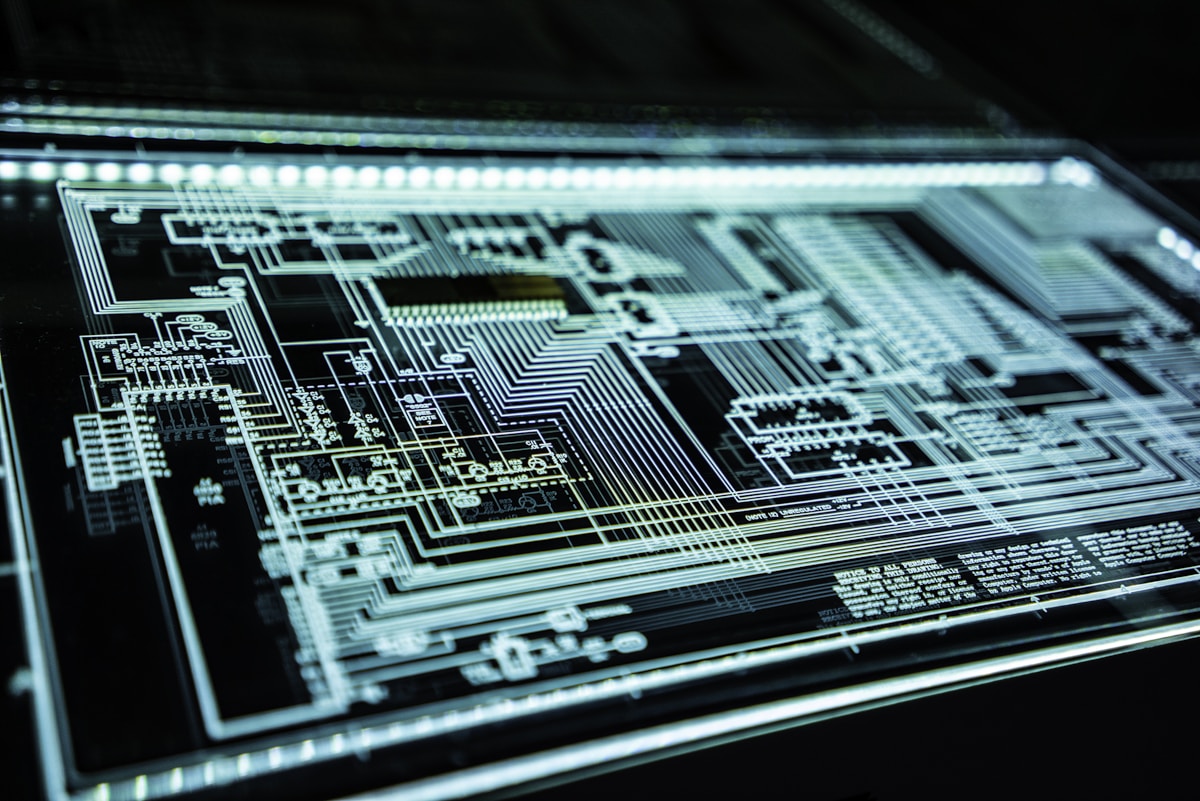
The Screen in Your Pocket Just Became Obsolete: Inside the Secret Lab That Killed the Smartphone Forever
The Day the Glass Died
Today, December 28, 2025, will go down in history books as the official date of death for the smartphone. For decades, we have been tethered to glowing rectangles of glass, but as of 6:00 AM PST, a shadowy collective known as Project Iris has released the full open-source architecture for Neural-Ocular Projection (NOP). This isn't just another gadget; it is the total dissolution of the interface between man and machine.
What is Neural-Ocular Projection?
Unlike the clunky AR glasses of the early 2020s or the invasive brain chips that required neurosurgery, NOP utilizes a non-invasive, sub-dermal patch—roughly the size of a postage stamp—placed behind the ear. This patch uses Quantum-Resonant Frequency (QRF) to stimulate the optic nerve directly, projecting a high-definition, 16K interface directly onto the user's field of vision. To the user, it looks like a floating, interactive display in physical space. To the bystander, you are simply looking at the world.
Key features of the NOP architecture include:
- Infinite Canvas: No more 6.7-inch limits. Your workspace is now the entire horizon.
- Latency-Free Interaction: By tapping into the motor cortex's intent signals, you can move 'windows' or type on virtual keyboards at the speed of thought.
- Zero-Battery Drain: The patch harvests energy from the body's natural thermal gradients.
The Open-Source Earthquake
The most shocking part of today's announcement isn't the technology itself—rumors of NOP have circulated in R&D circles for years—it's the delivery. By releasing the schematics and the IrisOS kernel to the public via a decentralized GitHub mirror, Project Iris has effectively bypassed the 'Big Tech' gatekeepers. Apple, Samsung, and Google now find themselves holding onto hardware moats that have dried up overnight.
Why This Changes Everything
We are looking at the 'dematerialization' of the modern world. If you can project a 100-inch cinema-grade screen onto any wall, why buy a TV? If your GPS is a glowing line on the actual road in front of you, why look at a dashboard? The implications for the global supply chain are staggering. We are moving from a world of 'buying things' to a world of 'downloading experiences.'
The Privacy Paradox
However, the breakthrough comes with a chilling set of questions. If the interface is inside our nervous system, where does the 'user' end and the 'advertiser' begin? Project Iris claims their open-source encryption prevents external hijacking, but the prospect of 'visual hacking'—where a third party could theoretically overlay images onto your actual reality—is a nightmare scenario that lawmakers are already scrambling to address.
The Verdict
The smartphone era lasted roughly 18 years. It was a brief, transitional phase in human evolution. Today, we step into the Post-Device Era. The screens are gone, but the data is everywhere. Welcome to the world of Iris.
🚀 Join the Evolution
This is just the beginning of the NeuralTech era. Subscribe to stay ahead of the curve.
Subscribe NowPhoto via Unsplash
Post a Comment