Custom ASIC Design for LLMs: The Strategic Shift in AI Infrastructure
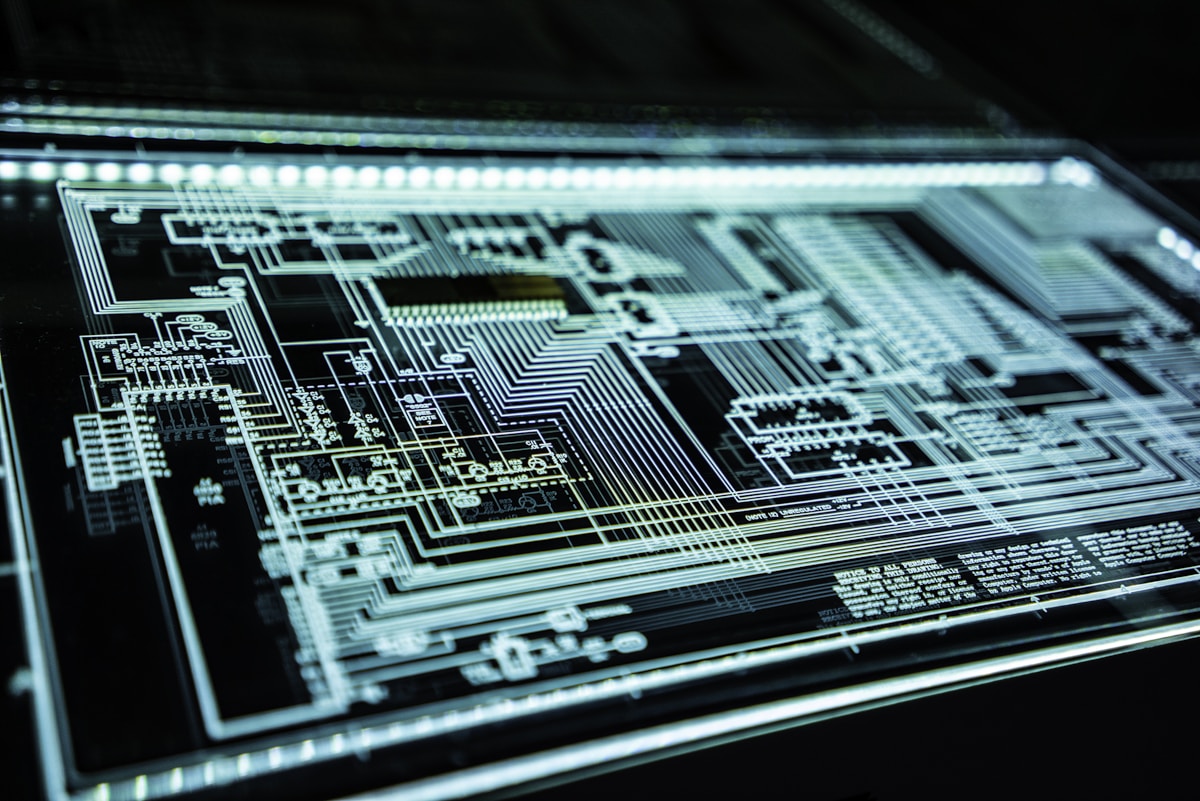
Custom ASIC Design for LLMs: The Strategic Shift in AI Infrastructure
AI & Semiconductor Industry Analyst | 8+ Years Covering Emerging Tech
The Infrastructure Bottleneck of the Generative Era
As Large Language Models (LLMs) continue to scale in parameter count and context window length, hardware requirements have reached a critical inflection point. For the past decade, the Graphics Processing Unit (GPU) has been the primary engine for AI training and inference. However, as the industry scales toward trillion-parameter models, the limitations of general-purpose hardware are becoming apparent. The industry is seeing a strategic shift toward custom ASIC design for LLMs, prioritizing domain-specific architectures over the versatility of traditional chips.
The Limitations of General-Purpose Architectures
GPUs were originally optimized for parallel graphics rendering. While this aligns with the matrix multiplications required for neural networks, general-purpose architectures often include logic and cache structures designed for a broader range of tasks than required by deep learning. In the context of LLMs, this can lead to inefficiencies in power consumption and silicon utilization compared to purpose-built hardware.
Furthermore, the primary bottleneck for LLM inference is frequently memory bandwidth rather than raw compute power (TFLOPS). LLM performance is often memory-bound; the speed at which weights move from memory to processing units dictates throughput. Custom ASICs allow for optimized memory paths, integrating High Bandwidth Memory (HBM3e) and specialized interconnects directly into the chip's logic to bypass standard bus constraints.
The Rise of Custom ASIC Design for LLMs
Application-Specific Integrated Circuits (ASICs) are optimized for specific mathematical operations. In AI, this involves streamlining silicon for the tensor operations and attention mechanisms central to the Transformer architecture. By focusing on essential components, engineers can improve area efficiency and increase the density of Multiply-Accumulate (MAC) units within thermal limits.
The move toward custom ASIC design is driven by power efficiency, throughput latency, and cost-at-scale. For hyperscale data center operators, incremental improvements in energy efficiency across large-scale deployments result in significant reductions in total cost of ownership (TCO).
Real-World Implementations
Several industry leaders have deployed custom silicon to production. Google’s Tensor Processing Unit (TPU), now in its fifth generation (TPU v5p), is purpose-built for the matrix operations used in Gemini models. The TPU utilizes a Systolic Array architecture to facilitate predictable data flow. Amazon Web Services (AWS) utilizes Trainium and Inferentia chips to provide optimized price-performance for specific cloud workloads. Similarly, Meta’s Training and Inference Accelerator (MTIA) is designed to support recommendation algorithms and generative models. These chips serve as specialized complements to GPUs for high-volume, predictable workloads.
Technical Hurdles: Memory and Interconnectivity
Developing custom ASICs involves significant technical challenges, most notably the 'Memory Wall.' As models grow, they require data delivery at increasing speeds, necessitating the integration of HBM. This technology is complex to manufacture and integrate. Effective ASIC design must balance compute density with available memory bandwidth to maintain high utilization rates.
Additionally, chip-to-chip communication is critical. Because LLMs are distributed across clusters, custom designs must incorporate high-speed interconnects to allow multiple ASICs to function as a unified system. Robust interconnect strategies are essential to ensure that performance gains at the chip level are not negated by network latency.
The Software Ecosystem
A primary challenge to ASIC adoption is the software ecosystem. NVIDIA’s market position is supported by CUDA, a mature platform with extensive library support. For custom ASICs to be viable, they must offer robust compiler stacks that support standard frameworks like PyTorch and JAX. The emergence of hardware-agnostic tools, such as OpenAI’s Triton and the PyTorch 2.0 compiler, is lowering the barrier to entry for new silicon architectures.
Economic Considerations
The capital expenditure required for 3nm or 5nm ASIC development is substantial, involving high R&D and tape-out costs. However, for organizations operating at massive scale, the operational savings and the ability to avoid third-party margins justify the investment. Owning the silicon allows companies to tailor hardware to proprietary model architectures and provides increased supply chain stability.
Conclusion
The transition toward custom ASIC design represents an evolution in AI infrastructure. As the industry matures, the focus is shifting from raw compute capacity to hardware efficiency. The future of AI acceleration will likely involve heterogeneous computing environments where GPUs and ASICs work in tandem to support increasingly complex model architectures, including emerging State Space Models (SSMs).
Sources
- Gartner Research: The Future of AI Semiconductors (2024).
- IEEE Spectrum: Why the TPU is the Benchmark for AI ASICs.
- Company Technical Whitepapers: AWS Trainium2 and Meta MTIA v2 Architecture Overviews.
- Semiconductor Engineering: Challenges in HBM3e Integration for AI Accelerators.
This article was AI-assisted and reviewed for factual integrity.
Photo by Unsplash on Unsplash
Post a Comment