Neuromorphic Computing Architecture for Edge AI: The Next Frontier in Low-Power Intelligence
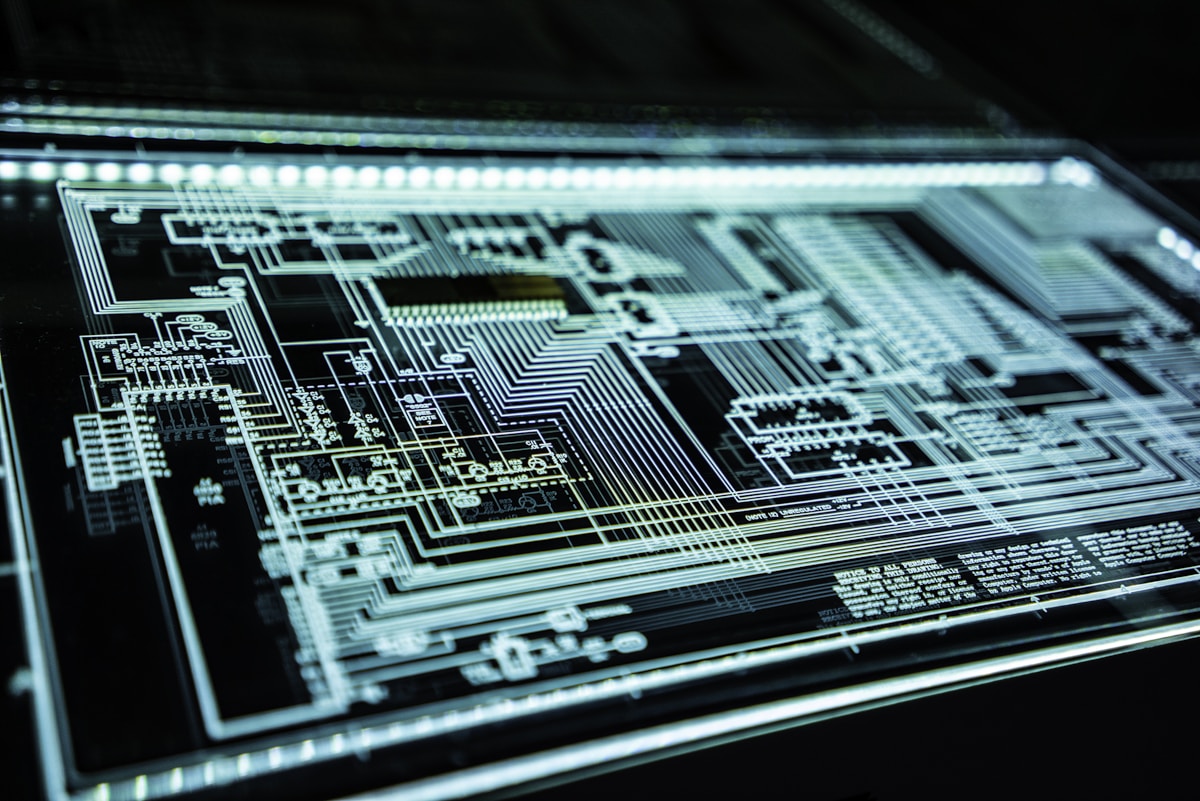
Neuromorphic Computing Architecture for Edge AI: The Next Frontier in Low-Power Intelligence
AI & Semiconductor Industry Analyst | 8+ Years Covering Emerging Tech
The Shift Toward Biological Efficiency in Silicon
The current trajectory of artificial intelligence is approaching significant physical and economic constraints. As Large Language Models (LLMs) and complex vision systems migrate from centralized data centers to the 'edge'—including sensors, drones, and wearable devices—the limitations of traditional silicon architectures are increasingly apparent. This transition has necessitated a fundamental rethink of semiconductor design, leading to the rise of neuromorphic computing architecture for edge AI.
Unlike the standard Von Neumann architecture, which requires constant data movement between a central processing unit (CPU) and memory, neuromorphic systems are modeled after biological neural structures. The human brain operates on approximately 20 watts of power while performing complex parallel operations. By mimicking the function of biological neurons and synapses, neuromorphic chips provide a path toward 'always-on' intelligence with significantly lower power requirements than traditional GPUs or digital signal processors (DSPs).
Addressing the Von Neumann Bottleneck
The necessity of neuromorphic design stems from the 'Von Neumann Bottleneck,' where the physical separation of the processor and memory creates latency and energy overhead. In traditional computing, every inference task requires data to travel across a bus. At the edge, where battery life and thermal envelopes are restricted, this data movement accounts for the majority of power consumption.
Neuromorphic computing architecture for edge AI addresses this by integrating memory and processing within the same units. In these systems, computational 'neurons' and memory 'synapses' are co-located. By localizing data at the site of computation, these chips reduce the energy-intensive transit of information. This shift is a key milestone in The Evolution of AI-Optimized Semiconductor Architectures, representing a transition from general-purpose processing to specialized, biologically inspired hardware.
Spiking Neural Networks: The Engine of Neuromorphic AI
At the heart of neuromorphic architecture is the Spiking Neural Network (SNN). Traditional Artificial Neural Networks (ANNs) are typically dense and continuous, processing data in synchronous frames regardless of whether the input has changed. This approach is inefficient for edge applications like video surveillance, where background data often remains static.
SNNs are event-driven, processing information only when a specific threshold, or 'spike' of activity, is met. If there is no change in the input, the neurons remain in a low-power state. This sparsity is the primary factor behind the efficiency of neuromorphic computing. For instance, a neuromorphic vision sensor (event-based camera) records only changes in pixel brightness rather than full frames. This can reduce the data load by up to 90%, enabling real-time processing with minimal energy consumption.
Implementations of Neuromorphic Hardware
The technical advantages of neuromorphic computing are currently being demonstrated in commercial and research-grade hardware:
- Intel Loihi 2: This second-generation neuromorphic research chip features 1 million programmable neurons. In specific benchmarks, Loihi has performed gesture recognition and robotic control tasks with up to 100 times less energy than conventional hardware and significantly lower latency.
- BrainChip Akida: A commercially available neuromorphic processor designed for edge devices. It supports 'on-chip learning,' allowing devices to process and adapt to new data locally, which enhances privacy and reduces reliance on cloud connectivity.
- IBM NorthPole: A prototype chip that integrates memory directly with compute units. NorthPole has demonstrated up to 25 times higher energy efficiency than 12nm GPUs when running specific image recognition tasks by eliminating the need for external memory access during inference.
Edge AI Use Cases
Neuromorphic computing architecture for edge AI is applicable across several sectors. In autonomous drones, neuromorphic chips enable high-speed obstacle avoidance. Because SNNs process spikes in real-time, these systems can detect and respond to moving objects with lower latency than frame-based vision systems.
In wearable healthcare, neuromorphic sensors can monitor EKG or EEG signals continuously. While traditional chips may exhaust small batteries quickly during constant analysis, a neuromorphic processor remains in a low-power state until it detects a specific anomaly in the signal, enabling extended battery life for medical devices.
In Industrial IoT, neuromorphic sensors are used for predictive maintenance by monitoring machine vibrations. By establishing a baseline acoustic signature on-device, the chip can identify deviations indicating mechanical failure, even in environments with limited connectivity.
Challenges in Software and Programmability
The primary barrier to widespread adoption is the software ecosystem. Most AI development currently relies on frameworks like TensorFlow and PyTorch, which are optimized for synchronous, frame-based processing. Adapting these models for the asynchronous, spike-based domain of neuromorphic hardware is a complex task.
Additionally, the lack of standardized APIs complicates the porting of software across different neuromorphic platforms. Industry efforts are currently focused on developing neuromorphic intermediate representations and specialized compilers to automate the conversion of traditional deep learning models into SNNs. Until these tools reach maturity, neuromorphic architecture will likely remain a specialized solution for power-constrained edge applications.
Hybrid Architectures and Future Outlook
The industry is moving toward hybrid architectures. Modern Systems on a Chip (SoCs) are increasingly incorporating a mix of CPUs for general tasks, GPUs for graphics, and neuromorphic Neural Processing Units (NPUs) for ultra-low-power sensing. This tiered approach allows devices to maintain a low-power state for most functions, activating high-performance processors only when complex reasoning is required.
Neuromorphic computing architecture for edge AI represents a significant shift from traditional computing paradigms. By aligning silicon design with the principles of biological efficiency, these architectures enable AI to operate autonomously in diverse environments without constant reliance on high-capacity power sources.
Sources
- IEEE Xplore: 'Neuromorphic Computing: The Path to Energy-Efficient AI at the Edge' (2023)
- Nature Communications: 'Real-time Edge Intelligence via Spiking Neural Networks' (2022)
- Intel Labs: 'Loihi 2: Architecture and Performance Benchmarks' (2023)
- DARPA: 'The Electronics Resurgence Initiative and the Future of Neuromorphic Hardware'
This article was AI-assisted and reviewed for factual integrity.
Photo by Unsplash on Unsplash
Post a Comment