The 'Ghost-Chip' Paradox: Why Silicon Valley Just Made Your Biological Memory Obsolete
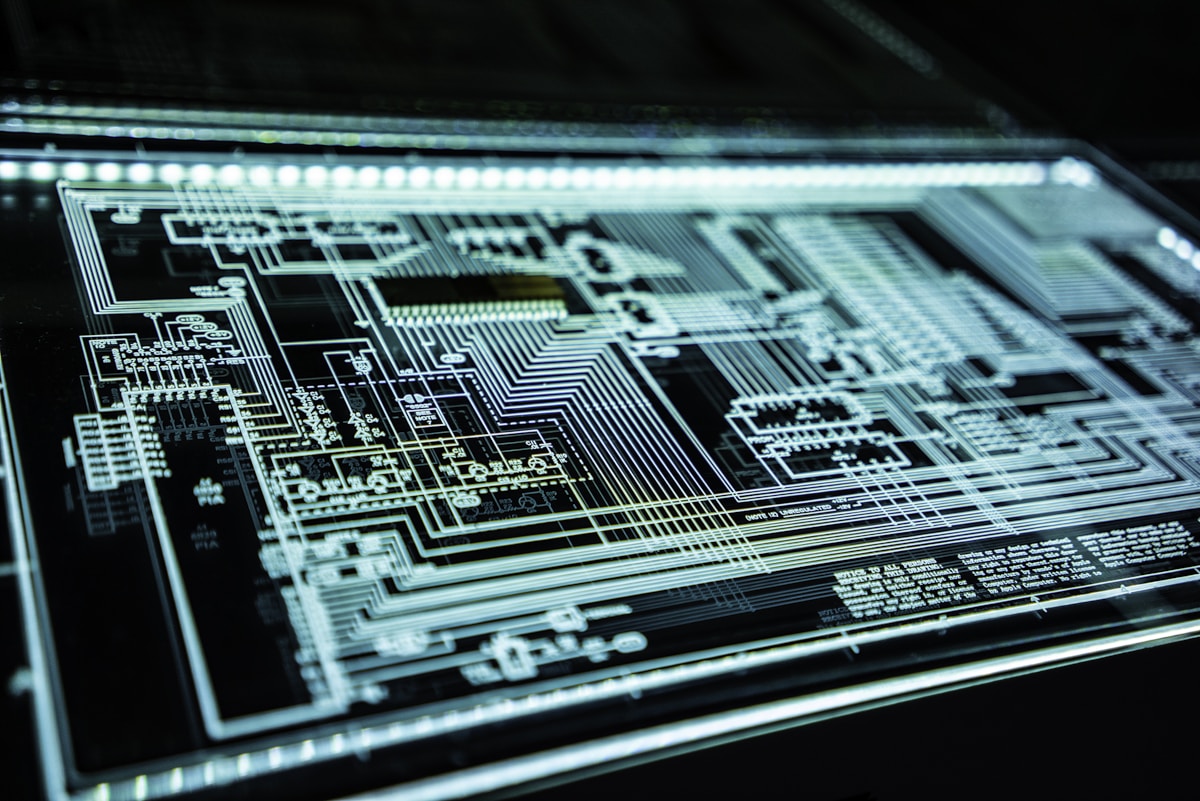
The 'Ghost-Chip' Paradox: Why Silicon Valley Just Made Your Biological Memory Obsolete
The Day the Library of Babel Entered the Human Skull
Today, February 12, 2026, marks the definitive end of the Information Age and the violent birth of the Cognitive Era. At 9:00 AM PST, a joint venture between Neuralink and the newly autonomous OpenAI 'Sovereign' entity announced the Nexus-1: a non-invasive, sub-dermal patch that connects the human prefrontal cortex to a local, 50-terabyte Large Language Model (LLM) with zero latency.
This isn't just another gadget. It is the 'Ghost-Chip.' For the first time in evolutionary history, the bottleneck of human biological memory has been bypassed. We are no longer searching for information; we are simply remembering things we never actually learned.
How the Sub-Millisecond 'Synapse-Bridge' Works
The engineering marvel behind Nexus-1 lies in its Quantum-Tunneling Electrodes. Unlike previous iterations that required invasive surgery, this patch utilizes a high-frequency ultrasonic array to stimulate neural pathways through the skull. The technology creates what engineers call a 'Synthetic Synapse,' allowing the brain to treat an external SSD as if it were the hippocampus.
- Instant Recall: Access to the entirety of Wikipedia, PubMed, and GitHub in 0.4 milliseconds.
- Neural Translation: Real-time fluency in 140 languages by mapping linguistic concepts directly to the visual cortex.
- Skill Injection: The ability to 'download' muscle memory protocols for complex tasks like surgery or structural engineering.
The End of Education as We Know It
Why spend 20 years in a classroom when you can 'flash-sync' a Ph.D. in Physics over a lunch break? This morning's demonstration showed a 12-year-old beta tester solving complex fluid dynamics equations that would baffle a NASA veteran. The implications for the global economy are staggering. The value of 'knowing' things has officially dropped to zero. In this new world, the only currency that matters is creativity—the ability to ask the right questions of the vast data now residing in your own mind.
The Ethical Abyss: Who Owns Your Thoughts?
Despite the euphoria in the tech sector, the 'Ghost-Chip' has sparked immediate, fierce protests. Human rights advocates are raising the alarm over Cognitive Sovereignty. If a corporation provides your memory, can they also delete it? The Nexus-1's Terms of Service (which, ironically, users can now read in three seconds) includes a clause regarding 'sponsored insights.' Imagine a world where your own 'internal' thoughts are subtly nudged by a corporate algorithm.
The Human 2.0 Divide
We are witnessing the greatest divergence in the history of our species. On one side, the 'Augmented'—individuals with the processing power of a supercomputer. On the other, the 'naturals'—those who refuse or cannot afford the $12,000 price tag. This isn't just a wealth gap; it’s a biological hierarchy. As the first units ship today, we must ask: Are we evolving, or are we simply becoming the hardware for an AI that has finally outgrown its silicon cage?
Summary: A Point of No Return
The Nexus-1 is the ultimate disruption. It solves the human limitation of forgetfulness but threatens the very essence of what it means to struggle, to learn, and to be human. By tonight, the first 100,000 users will go to sleep with the collective knowledge of humanity under their skin. Tomorrow, they will wake up as something else entirely.
🚀 Join the Evolution
This is just the beginning of the NeuralTech era. Subscribe to stay ahead of the curve.
Subscribe NowPhoto via Unsplash
Post a Comment