Neuromorphic Computing for Edge AI: The Future of Efficient Intelligence
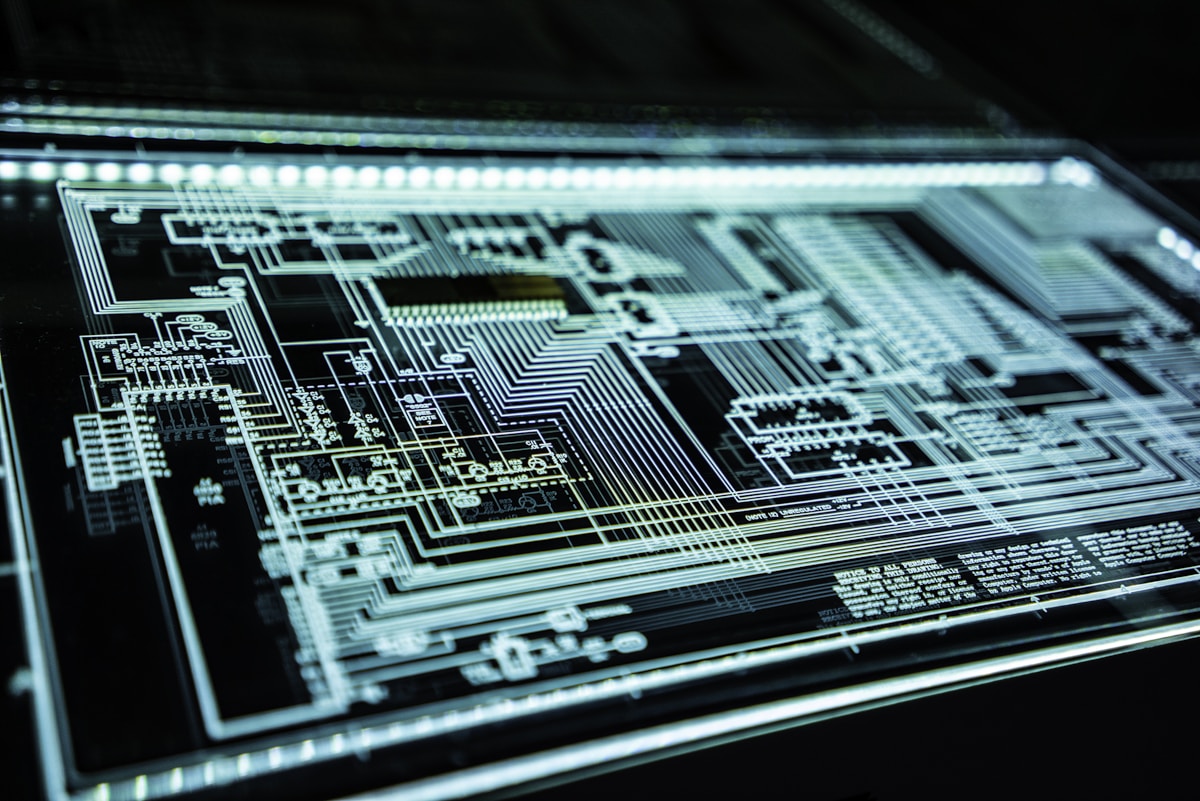
Neuromorphic Computing for Edge AI: The Future of Efficient Intelligence
AI & Semiconductor Industry Analyst | 8+ Years Covering Emerging Tech
Introduction: The Efficiency Crisis in Edge Intelligence
As artificial intelligence migrates from centralized data centers to the periphery of the network, a fundamental architectural conflict has emerged. Traditional deep learning models, while powerful, are computationally expensive and energy-intensive. For edge devices—ranging from autonomous drones to wearable medical sensors—the power demands of standard Von Neumann architectures often exceed physical constraints. This has led to the rise of neuromorphic computing for edge AI, a paradigm shift that moves away from traditional binary processing to emulate the biological efficiency of neural structures.
Neuromorphic engineering seeks to replicate the brain's ability to process information asynchronously. By reducing the constant data movement between memory and processor, neuromorphic systems provide a pathway for intelligence to operate with significantly lower power consumption, often measured in milliwatts, making it suitable for resource-constrained environments.
The Architectural Shift: Beyond Von Neumann
To understand the value of neuromorphic systems, one must recognize the limitations of current hardware. Most modern AI runs on GPUs or specialized TPUs. While these are optimized for the matrix multiplications required by deep learning, they largely adhere to the Von Neumann architecture, where the processing unit and memory are separate. This separation creates a 'memory bottleneck,' where the energy spent moving data can exceed the energy spent processing it.
Neuromorphic chips address this by utilizing a non-Von Neumann approach. In these systems, processing and memory are colocated, mimicking synaptic functions. This design is a cornerstone of next-generation semiconductor architecture, enabling massive parallelism and reducing latency. Instead of processing continuous streams of data, neuromorphic hardware uses Spiking Neural Networks (SNNs), which transmit information when a specific threshold—a 'spike'—is reached. This event-driven nature ensures that the system minimizes power consumption when there is no new input.
Spiking Neural Networks (SNNs) and Event-Driven Processing
The core technology behind neuromorphic computing for edge AI is the Spiking Neural Network (SNN). Unlike traditional Artificial Neural Networks (ANNs) that use continuous values to represent neuron activation, SNNs communicate via discrete, timed pulses. This resembles biological neural activity, where neurons fire only upon receiving sufficient stimulus.
In an edge AI context, this offers substantial efficiency gains. Consider a security camera equipped with a neuromorphic processor. A traditional camera-AI system processes every frame of video regardless of movement, consuming constant power. An event-driven neuromorphic system only processes changes in pixels. If the scene is static, the processor remains in a low-power state. This spatial and temporal sparsity allows neuromorphic hardware to achieve higher efficiency than traditional digital signal processors in specific monitoring tasks.
Applications of Neuromorphic Edge AI
The theoretical benefits of neuromorphic computing are being applied across several industries, moving from research prototypes to pilot implementations:
- Autonomous Micro-Drones: Small-scale drones require real-time obstacle avoidance within limited battery constraints. Research platforms like Intel’s Loihi have demonstrated the ability to process visual flow and adjust flight paths with significantly higher energy efficiency than traditional mobile CPUs in benchmarked tasks.
- Wearable Health Monitors: Devices monitoring ECG or EEG signals must detect anomalies in real-time. Neuromorphic processors can filter signal noise and activate high-power modules only when a potential health event is detected, extending the operational life of battery-powered wearables.
- Industrial Vibration Analysis: In 'Industry 4.0,' sensors monitor motor vibrations to predict failure. A neuromorphic edge chip can learn 'normal' vibration patterns on-device and trigger alerts upon detecting deviations, reducing the need to transmit raw data to the cloud.
Leading Platforms: Loihi, Akida, and the Competitive Landscape
Several key players are defining the semiconductor landscape for neuromorphic computing. Intel’s Loihi 2 is a prominent research platform, offering a programmable architecture for experimenting with different SNN topologies. It features 128 cores and supports up to 1 million functional neurons.
On the commercial side, BrainChip has released the Akida processor, a commercially available neuromorphic SoC (System on Chip). Akida is designed for integration into existing sensor ecosystems, providing on-chip learning capabilities. Other specialized firms, such as SynSense and GrAI Matter Labs, are focusing on ultra-low-power vision and audio processing for the consumer electronics and IoT markets.
The Roadmap to Mass Adoption
Several hurdles remain before neuromorphic computing becomes an industry standard. The most significant challenge is the software ecosystem. Most AI developers utilize frameworks like TensorFlow or PyTorch, which are designed for ANNs. Programming for SNNs requires a different mathematical approach and new tools, such as Intel’s Lava software framework.
Furthermore, manufacturing these chips at scale requires specialized CMOS processes or the integration of emerging memory technologies like Resistive RAM (ReRAM) or Memristors. These components can mimic synaptic plasticity more naturally than traditional transistors but are still moving toward high-volume commercial maturity.
Conclusion: The Convergence of Sensing and Intelligence
Neuromorphic computing represents a significant step in the evolution of edge AI. By integrating processing and sensing more closely at the semiconductor level, the industry is moving toward systems that reduce reliance on cloud-dependent, power-heavy architectures. For hardware architects, the shift toward neuromorphic systems is a necessary evolution to meet the efficiency demands of the growing ecosystem of autonomous, intelligent devices.
Sources
- Intel Labs: 'Neuromorphic Computing Research and Loihi 2 Specifications.'
- IEEE Xplore: 'A Survey of Neuromorphic Computing for the Edge.'
- Nature Electronics: 'Energy-efficient AI through Spiking Neural Networks.'
- BrainChip Holdings: 'Akida Neuromorphic Processor Whitepaper.'
- The International Roadmap for Semiconductors (IRDS): 'Outside-System Connectivity and Architecture Reports.'
This article was AI-assisted and reviewed for factual integrity.
Photo by Unsplash on Unsplash
Post a Comment