The Frontier of Silicon: Mastering Edge AI Chip Design Optimization
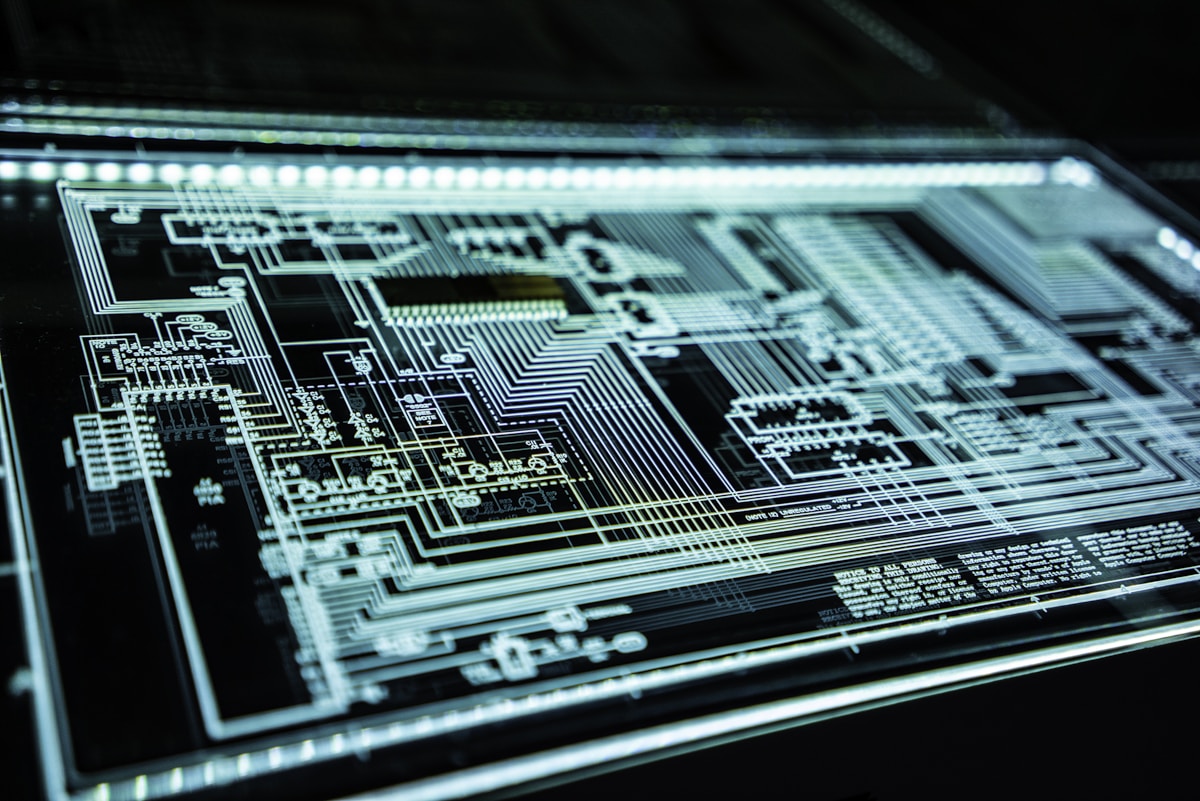
The Frontier of Silicon: Mastering Edge AI Chip Design Optimization
Senior Technology Analyst | Covering Enterprise IT, AI & Emerging Trends
The Shift from Cloud to Edge: A New Semiconductor Paradigm
Artificial intelligence is undergoing a significant transition. While the previous decade was defined by the scaling of large language models (LLMs) within hyperscale data centers, the current phase involves the migration of inference to the network perimeter. This shift necessitates a reevaluation of silicon engineering. Edge AI chip design optimization has become a primary focus for the next generation of semiconductor innovation.
Unlike cloud-based AI, where resources are elastic, edge environments are defined by rigid constraints. Designers must manage limited power envelopes, strict thermal ceilings, and the requirement for real-time deterministic latency. Achieving high-performance inference at the edge requires a holistic approach that bridges the gap between algorithmic requirements and low-level transistor logic.
The PPA Trilemma in Edge AI Environments
At the heart of Edge AI chip design optimization lies the semiconductor challenge of Power, Performance, and Area (PPA). In the context of edge intelligence, these metrics are weighted differently than in traditional computing. Performance is measured by raw throughput and energy efficiency, specifically TOPS (Tera Operations Per Second) per watt.
For example, an autonomous drone requires localized computer vision for obstacle avoidance. Excessive power consumption reduces operational time, while high thermal output necessitates additional cooling mass. Optimization strategies focus on techniques such as 'Dark Silicon' mitigation—ensuring that only the necessary components of the chip are active during specific inference cycles to conserve energy.
Domain-Specific Architectures (DSAs) and the Rise of the NPU
General-purpose CPUs and traditional GPUs are often inefficient for the specific mathematical workloads of deep learning. This has led to the development of Domain-Specific Architectures (DSAs). The Neural Processing Unit (NPU) has emerged as a standard for edge applications. These accelerators are purpose-built to handle the parallelization required for matrix multiplication and convolution operations.
A key trend in edge hardware architecture is the move toward heterogeneous computing. Modern Systems-on-Chip (SoCs) integrate high-efficiency CPU cores for control logic, GPUs for image preprocessing, and dedicated NPUs for neural network inference. By offloading AI tasks to specialized hardware, designers can achieve significant improvements in energy efficiency compared to general-purpose silicon.
Addressing the Memory Wall through In-Memory Computing
The 'Memory Wall' remains a significant bottleneck in Edge AI chip design. In traditional Von Neumann architectures, moving data between the processor and memory consumes more energy than the computation itself. For edge devices, this energy expenditure is a primary constraint.
To address this, designers are implementing In-Memory Computing (IMC). By performing calculations directly within the memory array—using technologies like SRAM or non-volatile memories (NVM) such as RRAM and MRAM—data movement is reduced. This approach is utilized in ultra-low-power microcontrollers designed for 'Always-On' applications, such as keyword spotting, where the neural network model resides within on-chip memory to minimize power leakage.
Hardware-Aware Model Compression and Quantization
Optimization requires synergy between software and hardware. Hardware-aware model compression involves tailoring AI models to the specific architecture of the chip through techniques such as pruning and quantization.
While cloud models often utilize 32-bit floating-point precision (FP32), edge chips are optimized for lower precision, such as INT8 or INT4. Reducing precision allows for smaller memory footprints and faster execution. A chip designed for 4-bit integer arithmetic can process data with a fraction of the power required for floating-point operations. This co-design approach ensures the silicon is optimized for the specific task.
Industrial IoT and Autonomous Vehicles
In the industrial sector, Edge AI chips are embedded in robotic systems for real-time defect detection. Optimization here focuses on deterministic latency—the guarantee that a frame will be processed within a specific millisecond window. Consistent processing is required to prevent mechanical failure on assembly lines.
In the automotive sector, Level 4 autonomous driving systems require high throughput to process data from LiDAR, Radar, and cameras simultaneously. Edge AI chip design in this space involves redundant processing paths and hardware-level safety features to meet ISO 26262 standards, ensuring functional safety in the event of partial hardware failure.
The Role of RISC-V in Customization
The open-source RISC-V Instruction Set Architecture (ISA) is contributing to the evolution of edge silicon. Because RISC-V is modular, designers can add custom instructions for AI acceleration. This level of customization allows for the creation of specialized accelerators without the legacy overhead of proprietary ISAs. Defining custom instructions at the hardware level is a significant lever for performance optimization.
Future Horizons: 3D Packaging and Neuromorphic Engineering
As planar scaling faces physical limits, designers are utilizing 3D IC (Integrated Circuit) packaging and chiplets. Vertical stacking of memory and logic reduces the physical distance data must travel, optimizing power consumption and latency.
Furthermore, neuromorphic computing—chips designed to mimic biological neural structures—represents an area of development. Spiking Neural Network (SNN) chips consume power primarily when data events occur, providing high efficiency for temporal data processing, such as audio streams or sensor fusion.
Conclusion: The Integrated Future of Edge Intelligence
Edge AI chip design optimization is a critical component of the modern digital economy. As the number of connected devices increases, the ability to process data locally, securely, and efficiently will be a defining factor for the semiconductor industry. By balancing architectural innovation with software-hardware co-design, engineers are utilizing edge constraints to drive silicon efficiency.
This article was AI-assisted and reviewed for factual integrity.
Photo by Unsplash on Unsplash
Post a Comment